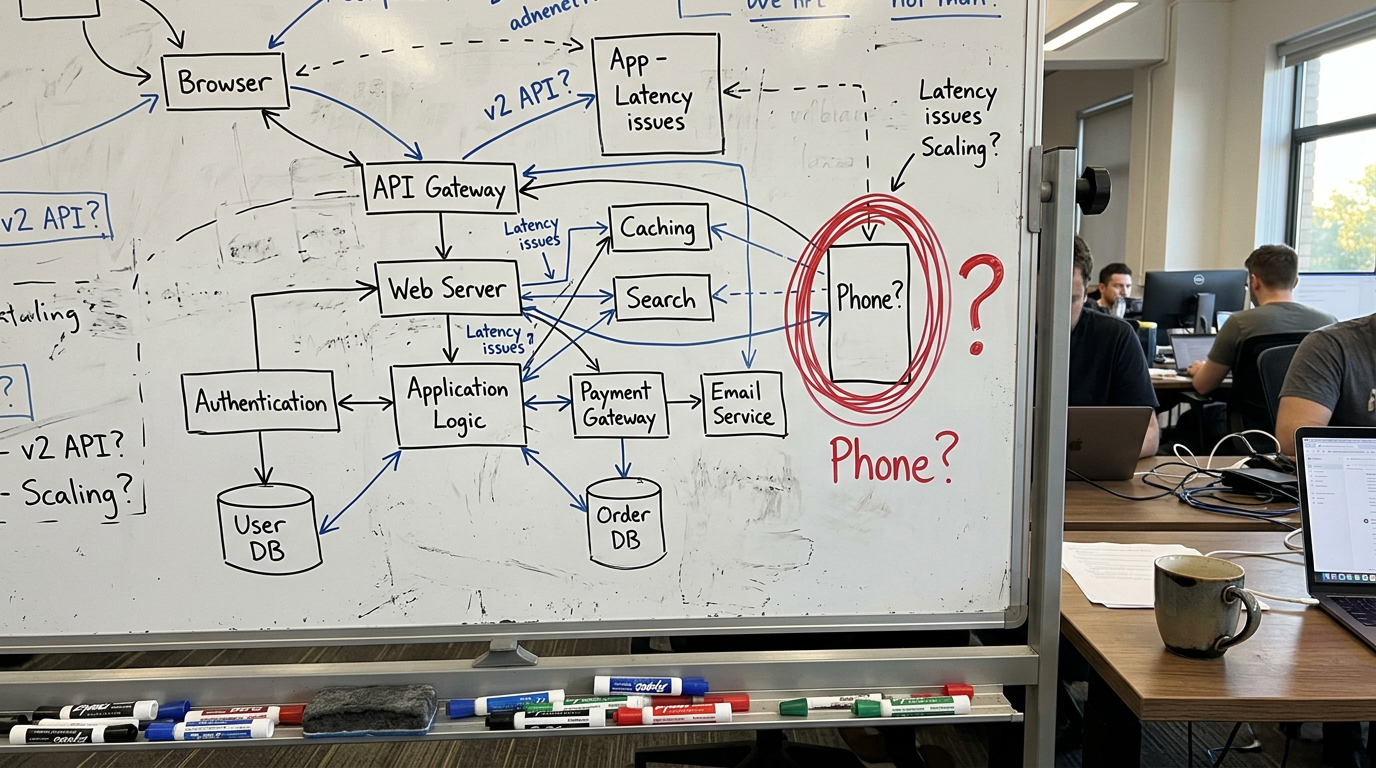
AI Agent Tools: Phone Is the Missing Layer
AI agents in 2026 have browser control, email, code execution, web search, database access, calendar management, CRM, messaging, file storage, and payments — thousands of integrations across every major framework. The tool stack covers nearly every digital interaction a workflow could need.
Phone is missing.
The Gap
Your agent can email a restaurant, but it can't call to make a reservation. It can look up a dentist's office online, but it can't call to book a cleaning. It can find a vendor's phone number, but it can't call to follow up on an overdue invoice.
This isn't because nobody's thought of it. It's because phone calls are fundamentally different from every other tool in the stack. Every other tool is request-response — send a request, wait milliseconds, get structured data back. Phone calls are minutes-long, real-time, voice-based conversations with a human on the other end who answers differently every time, puts you on hold, transfers you, and may not have the answer. There's no API on the other end.
The Result
Agent builders hit this wall constantly. The workflow is 90% automated — web search, data extraction, email drafts, calendar checks — and then it hits a step that says "call them" and everything stops.
The workaround is always the same: the agent presents the phone number and asks the human user to make the call. The agent goes from autonomous to assistant. The automation chain breaks.
Where Phone Blocks Entire Verticals
Healthcare, home services, government, supply chain, financial services — entire verticals stall because the critical step is a phone call nobody can automate. In each of these, the phone call isn't an edge case — it's the bottleneck.
What a Phone Tool Should Look Like
A phone tool for agents should work like every other tool in the stack. The interface needs to be simple:
Input: Phone number + what to accomplish + context Output: Structured data — outcome, summary, transcript
The agent shouldn't need to manage telephony, speech models, or conversation flows. It should call a function, pass parameters, and get structured JSON back. The same way it calls a search API or sends an email.
Here's what that looks like with AgentPhone:
# Input: what to call and why
response = httpx.post("https://agentphone.app/api/v1/calls", headers=headers, json={
    "to_phone_number": "+14155551234",
    "objective": "Book a dental cleaning for March 20, morning preferred",
    "business_name": "Pacific Heights Dental",
})

# Poll until done...

# Output: structured result
{
    "outcome": "achieved",
    "summary": "Booked cleaning for March 20 at 10am with Dr. Lee",
    "transcript": "...",
    "recording_url": "..."
}
Three fields in, structured data out. The same pattern as every other tool.
Inbound vs Outbound: Two Different Problems
There are two ways AI intersects with phone systems, and they're completely different problems:
Inbound — The AI IS the phone system. It answers incoming calls, greets callers, handles conversations, and routes people. This is what Vapi, Retell AI, and Bland AI build. You're creating a voice AI product — an AI receptionist, a call center bot, an IVR replacement.
Outbound (as a tool) — The AI USES the phone as a tool within a larger workflow. It has a job to do, part of that job requires a call, so it places one. You're not building a voice product — you're giving your existing agent one more capability.
The architecture is completely different:
- Inbound needs always-on infrastructure, concurrent call handling, real-time streaming, custom conversation flows, and deep telephony integration.
- Outbound-as-a-tool needs a simple API: here's who to call and what to accomplish, give me the results.
If you're building an AI receptionist, use Vapi or Retell. They're voice AI platforms with hundreds of configuration options, visual builders, and real-time streaming APIs.
If you don't want to build anything — you just need calls answered for your own business, not a platform to configure — that's a different problem than this post covers. NextPhone is a ready-made AI receptionist: no flows to design, no voice pipeline to wire up.
If your agent needs to call a receptionist, use AgentPhone. It's one API endpoint that returns structured data.
The Tool Chain Effect
Something interesting happens when you add phone to the agent tool stack. Tools that previously had dead ends now connect to the real world.
Search + Phone. Agent finds a business online → calls to check availability → gets a confirmed booking. Before, the chain broke at "here's their number."
CRM + Phone. Agent pulls unqualified leads → calls each one to verify interest → updates the lead status. Before, lead qualification required a human dialing through a list.
Phone is the bridge between digital workflows and the analog world of businesses that still run on voice. Adding it doesn't just add one capability — it unlocks every workflow that previously stalled at "now someone needs to call."
Adding Phone to Your Stack
AgentPhone integrates as a standard tool in any agent framework. The pattern is always the same: define a function that calls the API, register it as a tool, let the agent decide when to use it.
Framework-specific guides with copy-paste code:
- OpenAI Agents SDK —
@function_tooldecorator - LangChain —
BaseToolsubclass - CrewAI —
BaseToolsubclass with dedicated caller agent - MCP (Claude Code, Cursor) — MCP server with
place_phone_calltool
The core API guide with cURL, Python, and Node.js examples: How to Let Your AI Agent Place Phone Calls.
The agent tool stack has browser, code, database, email, search, calendar, CRM, messaging, files, and payments. Now it has phone too.